

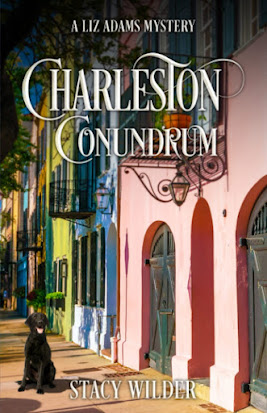



Recipes for foods found in
Charleston Conundrum
By Stacy Wilder
Liz’s King Ranch Chicken
Ingredients:
1 can cream of mushroom soup 8 oz. (2 cups) cheddar cheese
1 can cream of chicken soup 1 package corn tortillas
1 can Rotel tomatoes 1white onion diced
1 cup chicken stock 1 green bell pepper diced
rotisserie chicken 1 Tsp ancho chili powder
9×12 baking dish ½ tsp garlic salt
Pepper to taste
Preheat oven to 375 degrees.
Place corn tortillas in a bowl and cover with chicken stock. Soak until soft.
Shred chicken. Fine dice onion and bell pepper. Combine soup and cheese in a separate bowl. Use half of the tortillas to cover the bottom of the baking dish. Layer half of the chicken on top followed by half of the onion and green pepper. Follow with half of the cheese/soup mixture. Season. Repeat. Pour can of Rotel on top.
Bake for thirty minutes.
Enjoy!
Liz’s Oops Salad
Ingredients:
1 bag of mixed spring greens
I cup of strawberries diced
A few handfuls of blueberries
A few handfuls of raspberries
A few handfuls of blackberries
Wash and dry fresh produce. Toss and serve with your favorite raspberry vinaigrette. Garnish with toasted almonds.
Charleston Conundrum Cookies
This recipe is compliments of Chef Amber Griffin, Vermont. Chef Amber baked these during When Words Count Pitch Week Competition XXI. She is an amazing chef. Thank you Amber for allowing me to share this recipe.
Ingredients:
2 sticks butter (softened) 1 cup chocolate chips
1 cup brown sugar 3/4 cup pepita seeds
1 cup white sugar 1 teaspoon vanilla
1/2 teaspoon salt 2 cups flour
2 eggs 1 teaspoon vanilla
1/2 bag shredded coconut 1 bag Lays potato chips (crushed)
1/2 bag heath bar bits
Preheat oven to 350 degrees. Cream butter, sugar, and salt together. Add the eggs. Mix well.
Add coconut, heath bits, chocolate chips, pepita seeds, and vanilla.
Mix and add flour and baking soda. Mix until just combined. Mix in crushed potato chips. Drop on a baking sheet and bake for twelve to fifteen minutes.
Enjoy!
Lou’s Favorite Egg Salad
Ingredients:
eight hard-boiled eggs
¼ cup mayonnaise
2 Tsp. dijon mustard
4 Tsp. chopped celery
4 Tsp. chopped red onion
2 Tsp. dill
garlic salt to taste
pepper to taste
¼ tsp. smoked paprika
fresh dill as garnish
Finely chop the eggs, celery, and red onion and place them in a bowl. Stir in mayo, mustard, dill, garlic salt pepper, and paprika. Garnish with fresh dill. Serve on your favorite bread. Enjoy!
The Conundrum Cocktail
This recipe is compliments of the team at Hugh O’Connor’s Irish Pub, Houston, TX. Hugh O’Connor’s served the cocktail during the book launch party for Charleston Conundrum. Thank you Hugh O’Connor’s team for creating the cocktail and allowing me to share this recipe.
Ingredients:
1 ounce orange vodka
.75 ounces vodka
.75 ounces St. Germaine
.25 ounces Malibu rum
.25 ounces lemon juice
.25 ounces lavender syrup (add more to taste)
Splash of grenadine
Pour ingredients into a martini shaker. Mix, add ice. Shake multiple times. Strain and pour in a martini glass. Garnish with a lemon wedge. Enjoy!
The Charleston Conundrum Playlist
Available on Spotify – Charleston Conundrum Playlist
Fire and Rain, James Taylor
Dancing Queen, ABBA
S.O.S., ABBA
I Heard It Through the Grapevine, Marvin Gaye
I Second That Emotion, The Miracles
If I Could Turn Back Time, Cher
If I Were a Rich Man, Robert Merrill’s version
Hello, Adele
Edge of Glory, Lady Gaga
Wanted Dead Or Alive, Bon Jovi

.jpg)

.jpg)





.png)