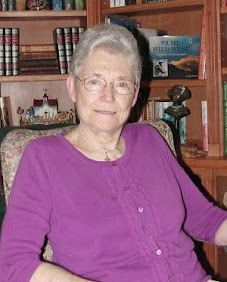


Interview with Dr. Florence Byham Weinberg
Why did you decide to self-publish?
At first, I tried for a major publisher in New York City. My agent worked hard but got refusals mostly on the grounds that my topic was “too local.” That effort lasted over a year. Trying one agent after another, one publisher after another might take many years and still yield nothing. I decided not to wait any longer but to go it alone. Self-publishing has been low in respect and prestige, but I think it is becoming more popular. The public, at least, has realized that the quality of self-published books can be high. It’s entirely up to the author—and the reader’s judgment. There are advantages, too. While the cost of self-publishing is considerable, still it is manageable, and profits from sales are all the author’s, not mostly to the publisher. Whether to publish or reprint is also entirely up to the author. I chose that route and so far, am happy with my decision.
What do you think most characterizes your writing?
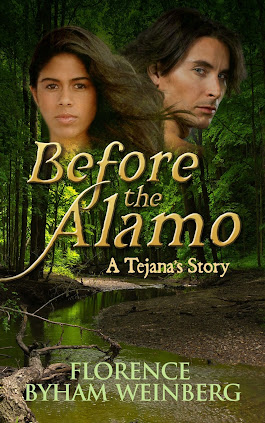
I think placing my protagonists in a setting that can be visualized, touched and smelled. My people must move in a “real” world, not in some gray abstraction. Before the Alamo is set in the nineteenth century, when roads were not paved or even graded, where the only floor covering in San Antonio was either brick or tile or none at all, when Main Plaza was a stretch of dust or mud, dotted with piles of manure. Laundry was done by beating clothes against a rock with a stick; soap was homemade, a boiled combo of lard and ashes. The “dryer” consisted of convenient bushes where the clothes were spread to catch the sunlight. Water was carried into the house in buckets. Life was not easy, and my book shows how hard it was. I want the reader to feel those inconveniences as if s/he were there.
How do you decide if your main character(s) will be male or female?
I write from the point of view of either gender. My choice depends on the subject matter. I have written two historical novels about the Franciscans who founded San Antonio by establishing their missions along the San Antonio River, beginning in 1716. Those main characters were, of course, mainly male, although an Apache Woman Warrior plays a major role in Apache Lance, Franciscan Cross. And I wrote four murder mysteries starring a real, historical Jesuit missionary named Ignaz Pfefferkorn, who acts as my detective. I have written three books set in the French Renaissance. I chose to write about Emilia Altamirano in Before the Alamo because I wanted to present a woman’s view of conditions and events in Texas before—and a bit after—1836. Women had to struggle much harder than men to make their mark in the nineteenth century, even into the mid twentieth, when they could exercise the vote. That struggle made writing from Emilia’s point of view much more interesting.
In researching this book, did you learn any unexpected, unusual, or fascinating information?
Yes, two things: María’s story, which is factual, and the Battle of the Medina River in 1813.
The historical María was bought by a Béxar de San Antonio native on the slave market of a border town, perhaps Rio Grande, which no longer exists. She’d been taken from her tribe (perhaps the Otomí) as a baby and raised by a Spaniard as his daughter. She learned to read, write. And learned all the graces of a Spanish lady. When she reached puberty, he could not resist her charms and he assaulted her. He blamed her for seducing him and sold her on the slave market. That is when the scion of a San Antonio pioneer family bought her. She became a slave in his household.
A librarian in the Alamo Library handed me the statement about María, made by a descendant of that family. I at once recognized its importance. María, one of the protagonists in my story, is, of course, Emilia’s mother.

WELCOME to DAY 6 of the @ENIGMASERIES
#ShortStory Journey Dec 8th to Dec 15th
#GIVEAWAYS Available
Gifts available for Day 6 are two ebooks of the featured short story plus one ebook of the newest release Hidden Target. That’s 3 winners.
Author Insights
Mathias, Dutch, and Halvorson market their cryptocurrency programs in economically challenged countries in The Enigma Source. Desperate governments trying to avoid the horrific outcomes of their economic free fall consider currency alternatives. Mathias discovered robust competition during their bid to gain favor the leaders in Venezuela. Mathias, a polished huckster, decided there was only one way to fight another day—survive.
Our characters rise to the challenges. Technologist and Blockchain programmer, Dr. Halvorson, uses the programs he created to orchestrate their escape from the Venezuelan Police. Mathias’s normal mode of transport, a private helicopter, is not always available. Mathias is out for revenge at those who betrayed him. His plans of wealth and power end up on life support. The exit strategy, a key element of this story is provided from our audble story in this link. YouTube link: https://youtu.be/nXsPgYtJTog
We found the next stage of their journey was not needed for The Enigma Source, yet readers and fans wanted to know what happened. We had no intention of giving more words to these cyber crooks in another book, but they screamed to have their story told. The unanswered questions for this trio of misfits as their lives hit rock bottom drove us to create this short story. Please let us know if you believe they chose the right path.
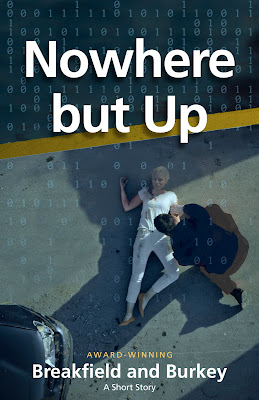
About the Short Story
Mathias and Halvorson are trudging toward the Brazilian border to escape the Venezuelan secret police who want to kill them.
Once they enjoyed the first-class service, today they wallow in third-world transport and lifestyle. Escape holds the promise of shearing more sheep to line their pockets.
Plans to cross the border get completely derailed as Mathias and Halvorson run into absolutely the last person they expected. Their hotly contested vendetta devolves into gunfire. The colossal distraction gives the three escapees time to flee. A non-negotiable bargain between the trio results in a risk-filled escape from Venezuela.
The hazardous journey takes this trio to a new opportunity. Mathias is a self-proclaimed leader with plans to get back on top. His methods are unorthodox yet highly effective.
Available on Amazon https://bit.ly/Nowhere_But We look forward to your review and comments on our short stories.
About the Authors
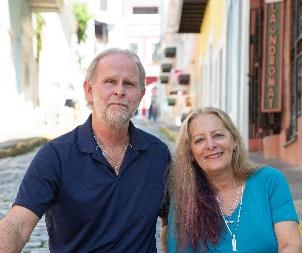
Charles Breakfield and Rox Burkey are co-authors of the award-winning Enigma Series. Their characters demand that their stories are told. The storytelling began with a few heroes, then expanded to those with self-serving motives. We love storytelling and hope readers enjoy learning more about our shorts. Looking forward to your feedback and reviews of our stories.
Breakfield is a technology expert specifically in security, networking, voice, and anything digital. He enjoys writing, studying World War II history, travel, and cultural exchanges. Charles is also a fan of wine tastings, wine making, Harley riding, cooking extravaganzas, and woodworking.
Burkey is a 25+ year applied technology professional who optimizes technology and business investments for global customers. She focuses on optimized customer experiences. Rox loves interviewing authors, writing white papers, reviewing books, and loves creating fiction.
Together they create award-winning stories that resonate with men and women, young and experienced adults, and bring a fresh new view to technology threats of today. Please visit their website, look around, and grab some free stuff https://www.EnigmaSeries.com.
Find us and Follow us
Website: https://www.EnigmaSeries.com
Blog: https://EnigmaSeries.com
LinkedIn: https://www.linkedin.com/in/charlesbreakfield and
https://www.linkedin.com/in/roxanneburkey
Twitter: @EnigmaSeries and @1rburkey
Facebook: https://www.facebook.com/TheEnigmaSeries/
YouTube: https://www.youtube.com/channel/UC6Vz4x5ctTnx3yUhZk1OJkw
Thank you for visiting. Please leave your comment below for a chance to win.

BAR NONE: WHICH DITCH IS WHICH
GUEST POST BY LOREN STEFFY
Originally published July, 2021, on the author’s blog
In The Big Empty, I have several references to bar ditches — the trenches that run beside many rural Texas roads. The ditches are designed, at least in part, for flood control. They may also help to keep livestock from wandering onto the highway.
My editor flagged the term repeatedly, saying she’d never heard it and most readers probably hadn’t either. I attributed to this to her living in Pennsylvania and being unfamiliar with the terminology of rural Texas. After all, she hadn’t heard of a gimme cap, either.
As the manuscript neared completion, one of the readers I enlisted had grown up in West Texas and was familiar with the term. However, she pointed out that a journalism instructor at Texas A&M once admonished her for using it. He told her not only should she avoid it, but she shouldn’t use the more complete term, “borrow ditch,” either.
I had always heard that the term comes from the road-building technique in rural areas. Crews “borrow” dirt from the sides to crown the roadway before paving. The practice left trenches on either side of the pavement. The term was latter shortened from “borrow” to “bar.”
Well, it turns out, “bar ditches” are the subject of much discussion and controversy, and my editor isn’t the only one who doesn’t like it. Even people who live with bar ditches everyday don’t necessary embrace the term. There’s also a lot of debate about its origins. Some apparently believe it dates to road building in England.
I’d be curious what others have heard about the term and its history. Have you heard it before? What did you think it means?
Regardless, for The Big Empty, I insisted that “bar ditch” was a pretty common term in Texas, and I decided to keep it in.
And yes, in some places, the bar ditches are wide enough that you can change a tire if your truck gets knocked off the road by a rented moving van.


Interview with Kathleen Y’Barbo
Tell us about your publishing journey and how THE YES DARE came to be.
I’ve been publishing for 20 years as of 2021. Back when I started, traditional publishing was the only way to get a book in print. Over the years I’ve been blessed to have more than 100 books released by traditional publishers. In 2021, however, I went hybrid and released THE YES DARE, my first independently published contemporary romance novel. With more traditionally published books in the works, I plan to continue as a hybrid author.
Where did you get the idea for THE YES DARE?
THE YES DARE is the name of a self-help book that the heroine and her best friend are reading in the novel. The premise is to be brave enough to say yes to new experiences. The book itself does not exist, however.
You’ve said this book took a while to get published. How long and why?
Almost five years! The book was set to be published but the contemporary fiction line closed before the story could go to print. I was busy writing other books and didn’t get back to do anything with this one until earlier this year.
You’re not just a writer, are you? What else do you do and what do you enjoy when you’re not writing?
That’s correct. I’m also a certified paralegal specializing in wills, probate, and family law. When I’m not working or writing, I’m reading, enjoying photography, and taking long drives with my husband.
You’ve been published for twenty years. That’s quite a feat. What kinds of advice would you give to someone who wants to start writing?
Just do it. Literally. Just start writing. Figure it out as you go along, but get words on a page.
What is your favorite book? Favorite author? Do you have an author that inspired/inspires you to write?
No way I can name just one favorite author or book!! There are way too many! My first favorite—that I can remember—would be Laura Ingalls Wilder and Little House on the Prairie.
Are you working on anything now?
I’ve been editing and re-releasing books that have had rights returned to me. So far I’ve released a set of novellas called the 20th Anniversary Special Edition Novellas and put new covers on FIREFLY SUMMER and AUTUMN LEAVES, books 1 and 2 of the Pies, Books & Jesus Book Club series. Now I’m working my way through edits and new covers for my Bayou Nouvelle series of romance novels, both contemporary and historical, set in fiction Latagnier, Louisiana.
How can readers connect with you?
I love Instagram and also have a presence on Facebook and Twitter. I’m also available by email and send out a newsletter when I have something exciting to talk about. You can find all the details about social media, newsletter, etc. on my website at www.kathleenybarbo.com.


Interview with Laurie Moore-Moore
You call Gone to Dallas an historical novel salted with history. What does that mean?
The background in which the story unfolds is built around actual happenings in Dallas and in Texas at the time—that’s what I call, “salted with history.” For instance: a grand ball, the visit of a mud and muck circus, the collapse of the bridge over the Trinity, a plague of locusts, the fire that burns Dallas to the ground. I couldn’t make up more interesting events as a backdrop to the story! And although most of my characters are fictional, the book is also peppered with real people—from Sarah Cockrell, often called Dallas’s first capitalist, and certainly a brilliant businesswoman, to Barry Derrit, the slave who manned the toll bridge over the Trinity River. These characters play active roles in the fictional story. My goal was a really good read, rooted in history, with a spark of inspiration
It’s hot off the press . . .what early response have you had?
Here are three examples:
*Paul Hobby, former CEO of Texas Monthly wrote, “Laurie Moore-Moore projects a tale of decency and resourcefulness that is fundamental to the continuing identity of the American West in general and of Texas specifically.”
*Teresa Burleson, Director, Stockyards Museum, Fort Worth, said, “Sara was fascinating—a strong and enterprising young woman. She had the grit and moxie that Texas women are known for. A good fictional read with real historical events thrown in—an interesting twist. I come from a long line of strong Texas women, so I find Sara and the other women in this story inspiring.”
*Dr. W. Arthur Porter, former Professor and Associate Dean for Innovation at the University of Texas at Austin, used multiple exclamation marks in his review of the book. “A female protagonist who’s Tennessee Smart and Texas Tough! Gone to Dallas captures an historically accurate essence of early Texas and how committed and tenacious early settlers had to be to make it — especially the women!”
Why is the novel’s title Gone to Dallas?
Back when Texas was part of Mexico, Americans fleeing the law, creditors, or other problems would sometimes flee to Texas, generally painting or posting signs saying “Gone to Texas” or GTT on their doors or fence posts. The message became associated with law breakers and other rascals. When Texas won its independence, it began granting land to newcomers. People in search of homesteads and opportunity began to flow into the state. Signs were posted and wagons painted with “Gone to Texas.” This time, the words were a symbol of available land and new opportunity. Some of those who were “Gone to Texas” were “Gone to Dallas”—Thus the novel’s name.
Gone to Dallas is book one of your Brave and Strong series. Why that name?
The name comes from the last phrases of the Texas state song:
“God bless you Texas and keep you brave and strong
that you might grow in power and worth throughout the ages long.”
It seemed to me that our Texas ancestors—men and women alike—were brave and strong. I wanted to recognize and honor that in the name of the book series and in my new Podcast, Texas Brave and Strong.
Why write about Dallas in this time (1856-1861)?
I chose Dallas because it’s home and also because the city has a fascinating history! Gone to Dallas is keyed to the period when Dallas began to take shape and grow. It ends just as the Civil War is about to begin. Also, people all over the world seem to have a fascination with the city. Some of that goes back to the old Dallas TV series, and to the mystique of the Dallas Cowboys football team in Roger Staubach’s era. I traveled in my business for thirty years and taxi and Uber drivers would almost always want to talk about some aspect of Dallas as soon as they knew where I was from.
What is your writing process?
I’m what the publishing world calls a seat-of-the-pants writer. I don’t outline the entire story in advance. I just sit down and start to write. The first 54,000 words took less than a month to write. . . although they ended up being in the middle of the book! Feedback from very early readers was helpful in shaping the story, but the characters took control and I just followed with the words. I was sometimes surprised by the twists and turns in the story. I hope readers will be as well. Writing the novel was a joyful experience!
Any clues about the sequel?
The sequel—Cotton, Cattle, and Conflict starts with the Civil War and carries through Reconstruction. I was tempted to name it Camels, Cattle, and Conflict.


In Creatrix Rising, Raffelock lays out—through personal stories and essays—the highlights of the past fifty years, in which women have gone from a quiet strength to a resounding voice. She invites us along on her own transformational journey by providing probing questions for reflection so that we can flesh out and bring to life this new archetype within ourselves. If what the Dalai Lama has predicted—that women will save the world—proves true, then the Creatrix will for certain be out front, leading the pack.
“The perfect topic at the perfect time, Stephanie Raffelock’s self-help memoir, Creatrix Rising, identifies a new archetype, the Creatrix, that transcends the old archetype of Crone. Her stories and insights about how far women have come is nothing short of inspirational. A must-read for any woman who wants to embrace the strength and creativity of midlife.” -Marci Shimoff, #1 New York Times best-selling author of Happy for No Reason and Chicken Soup for the Women’s Soul

MARKING THE YEARS
GUEST POST
By Stephanie Raffelock
(originally posted to the author’s website May, 2021)
Recently, my friend Tara was taking some pictures of me in the park. In one shot, the light was just right, revealing how silver my hair is becoming. This is a desired effect. I stopped dying my hair over two years ago, a liberating action that gifts me a crown of silver to wear into my seventies. It seems to me to be an appropriate marker. In this last year of my sixties, there are a lot of markers, pointing the way to what’s next in the brave and bold adventure of getting older.
Embodying the role of an elder is upon me and it doesn’t look like what I thought it would. All of my best, saved up wisdom and advice means nothing to a younger generation. I certainly didn’t want the advice of older women when I was in my twenties, thirties and forties. The lesson is this: You don’t really become an elder until you learn to listen deeply to the younger people around you, and offer support, validation and goodwill. Then and only then, might you be honored with a conversation that will benefit each of you. A lot of being an elder is bearing witness to the process of youth as it struggles out of the chrysalis and unfolds it’s wet wings. Kindness, support and encouragement are powerful and empowering offerings to give to the next generation.
Another marker is the shift in energy that I’m feeling. I’ve lived a physically active life for all of my years. It’s a real blessing now. I know that most aches in my body can be transcended through a morning walk. I’m able to exercise daily, though some of my activities have changed. I no longer play tennis, but I walk for three miles every day. I do some stretching. A swimming allows me to have an easy range of motion. In spite of all of that, I’m feeling the need for quiet and rest. My Type-A personality can no longer go eight to ten hours a day. The disappointment I’m faced with is that the energy that once propelled me to meet all deadlines and be proactive in my work, has waned. This means that I have to choose the outline of my days more carefully so that it contributes to my health and not to burnout.
In the past couple of years, I’ve come to a deeper level of
reflection, which has resulted in embracing past pain, joy, regrets, sorrow and
love. My life has not been smooth. Most people’s aren’t. But the acceptance of
my jagged edges has produced a tenderness that grows from a heart that
cherishes the lessons and longings of life. That’s given me a great sense of
peace.
As I embrace the years and the process of getting older, I’m drawn to the chairs on my back porch which overlook the forest. Nature keeps us alive after midlife for a reason. Obviously it’s not for the proliferation of the species. I believe that it’s for the purpose of reflection and contemplation upon the life we’ve lived and where all of that fits into the grand scheme of things. Aging brings a lot of outer changes — silver hair, waning energy and the emergence of a reflective heart.
At this age, I believe that I’m here to begin the slow, rolling surrender to some great, eternal love, some indescribable awe that pulls me into feeling that I am a part of everything. The stardust from which I was made is the same stardust to which I’ll return. And the knowledge of this particular marker fills me with gratitude. I love the accumulating years. What a wonder to evolve and grown psychologically and spiritually until the day we die.


A graduate of Naropa University’s program in Writing and Poetics, Stephanie was a contributor to The Rogue Valley Messenger in Oregon. She has blogged for Nexus Magazine, Omaha Lifestyles, Care2.com, as well as SixtyandMe.com.
A former i-Heart Radio host, she is now a popular guest on podcasts, where she inspires women to embrace the strength and passion of their personal story. Stephanie continues to build her speaker’s resume by giving presentations for groups like The Ashland Literary Arts Festival, Breaking the Glass, WINS at Charles Schwab and Southern Oregon University, Friends of the Hannon Library. Her commitment to uplift women extends to teaching personal development classes for incarcerated women and non-profits, including Dress for Success, Austin.
A recent transplant to Austin, Texas Stephanie enjoys an active life with her husband, Dean, and their Labrador retriever, Mickey Mantel Raffelock.
Website | Goodreads | Instagram | Facebook | LinkedIn

Enter the Rafflecopter Giveaway
|
9/1/21 |
Excerpt |
|
|
9/1/21 |
Review |
|
|
9/2/21 |
Review |
|
|
9/2/21 |
BONUS Promo |
|
|
9/3/21 |
Review |
|
|
9/3/21 |
Review |
|
|
9/4/21 |
Author Interview |
|
|
9/5/21 |
Author Interview |
|
|
9/6/21 |
Review |
|
|
9/6/21 |
Video Guest Post |
|
|
9/7/21 |
Review |
|
|
9/8/21 |
Review |
|
|
9/8/21 |
Guest Post |
|
|
9/9/21 |
Review |
|
|
9/10/21 |
Review |
|
|
9/10/21 |
Review |


PRAISE FOR TRACE OF DOUBT :
“Filled with high stakes, high emotion, and high intrigue.” – LYNN H. BLACKBURN, award-winning author of UNKNOWN THREAT and ONE FINAL BREATH
“Trace of Doubt is a suspense reader’s best friend. From page one until the end, the action is intense and the storyline keeps you guessing.” – EVA MARIE EVERSON, bestselling author of FIVE BRIDES and DUST
“DiAnn Mills serves up a perfect blend of action, grit, and heart. . . Trace of Doubt takes romantic suspense to a whole new level.” – JAMES R. HANNIBAL, award-winning author of THE PARIS BETRAYAL
“Well-researched . . . with some surprising twists along the way. In Trace of Doubt, Mills weaves together a tale of faith, intrigue, and suspense that her fans are sure to enjoy.” – STEVEN JAMES, award-winning author of SYNAPSE and EVERY WICKED MAN

Link to the Book Trailer on YouTube
What a thrilling read!
For 15 years Shelby Pearce had remained behind bars for a crime she says she did not commit. She spends her time turning over a religious leaf and finding her heart in Christianity. Once she is released, she wants nothing more than to live a quiet life. But then her paths cross with Agent Denton McClure, a man with his own agenda, set out to prove that Shelby is a murderer and a thief.
Over the course of the story, these two characters souls collide in a beautiful way. Shelby shares her faith with Denton a little at a time, which over the course of the book helps him to find his faith as well. The love that develops is a slow one, but it’s deep and real and gave me all the feels!
What I loved about this story was how gentle and patient Denton was. He gave her time to heal and grow until she was ready to be in a relationship with him.
I also loved all the plot twists in this book and how over time Shelby’s story and her life slowly begins to unfold. The ending packs quite a surprise! One I didn’t see coming!
You can tell Mills put her heart into this story, with its gripping plot and it’s deeply developed characters. The pace is a real page turner, and the story was so easy to get lost in. I was very impressed with Mills writing and would love to read more of her books in the future.
If you are a fan of thrillers, suspense, and romance, this book is definitely for you!
Rating: 4/5